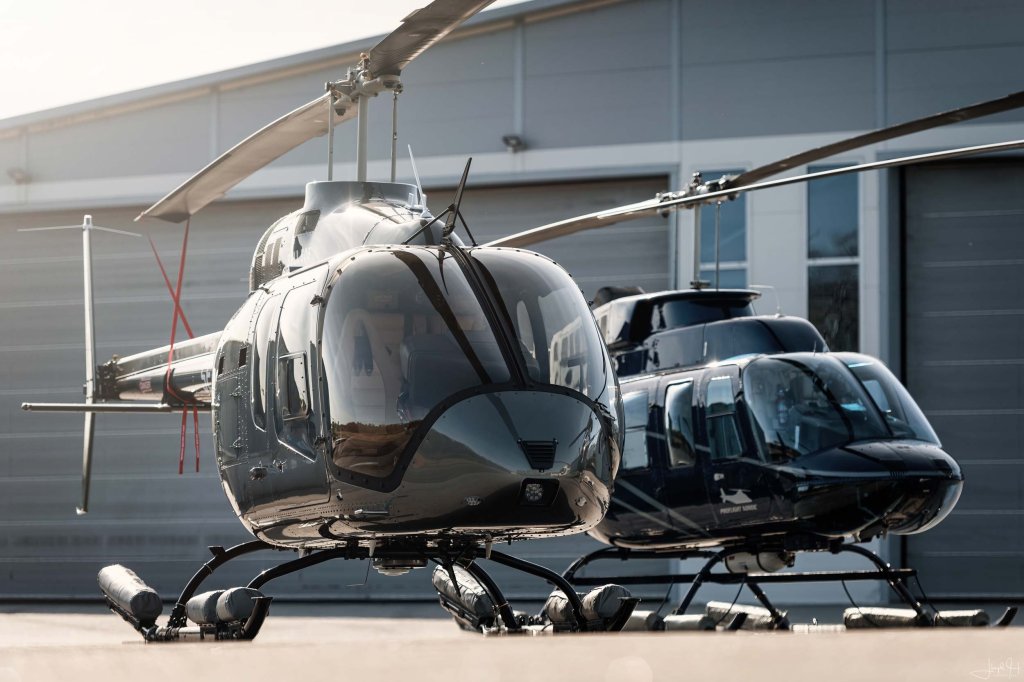
“You have control” ~ Every flying instructor, ever
There comes a point in certain people’s lives when challenge becomes a choice. After years of navigating complex systems, leading under pressure, and turning data into strategy, the appetite for something real, demanding, and unfiltered begins to surface again. And more often than you’d expect, that instinct pulls these people towards a particular kind of machine.
Not a supercar or a yacht, nor any other of the many curated pursuits of status that money alone can provide. But the kind of machine that requires more than wealth or interest to master, and which provides more than simply convenience and luxury.
The helicopter.

For a surprising number of high performers — the relentlessly driven, the quietly obsessive — helicopter flying has become a magnetic pursuit. It appeals to those wired not just for achievement, but for accountability. It’s a deep-seated drive rooted not in thrill-seeking or aesthetics, but psychology.
Some people believe they shape their own outcomes. While they recognise what luck they have had, they don’t chalk things up to fate or fortune. They certainly don’t plan on it.
They believe in preparation, precision, and personal responsibility.
Psychologists call this an “internal locus of control”: a deep-seated belief that you make your own luck, write your own story, and bear the consequences of your own decisions. And if you’ve ever built something from nothing, you probably know this feeling. It’s the mindset that says, If I study hard enough, train long enough, and persevere, I can master anything. Helicopter flying is that belief made physical.
Helicopter flying is a skill nurtured through hours of study, practice, and most importantly, failure. You can’t fake it. Of course you have to pay for the training with money, but everyone earns their license with a very particular kind of self-motivation necessary to learn something complicated and unforgiving.
That kind of full-spectrum engagement — mental, physical, and emotional — is rare in everyday life. In today’s culture of convenience it may even be eschewed. In the cockpit, there’s no buffer, no filter, and no way to spin a bad outcome.
The machine responds only to what you do, and even the whims of the weather won’t provide the safe haven of excuses. If you find yourself in turbulence, it’s because you failed to predict it or plan for it. For someone who values personal agency above all else, that feedback loop is deeply satisfying. It confirms a worldview: that mastery is possible, and that effort matters.
There’s also the appeal of earned competence. Helicopter flying doesn’t tolerate shortcuts. It requires study, training, and the genuine humility necessary to see and learn from your own error.
The process of becoming a pilot isn’t just about skill acquisition; it’s about showing up, again and again, to get better at something hard. It’s the same mindset that fuels a founder’s sixth startup, or a writer’s fifteenth draft — a belief that growth is the reward.
So why do certain people gravitate toward helicopter flying? It’s not about escape or spectacle, quite the opposite. There’s no performance, no audience, just absolute presence.
So why helicopters? The noise, vibration and the lack of space inside mean any sense of luxury can only come from the benefits of convenience or self-image. These might be the reasons people use helicopters but it’s not why people learn to fly them.
It’s because they reward focus. Because they demand effort. Because they don’t let you fake it. And for a certain kind of mind — one that doesn’t look for easy answers or simple things — that’s exactly the point.
That’s not luxury.
That’s control.
 Rotor Tips